Noseda opens NSO subscription season with a kaleidoscopic tour of France
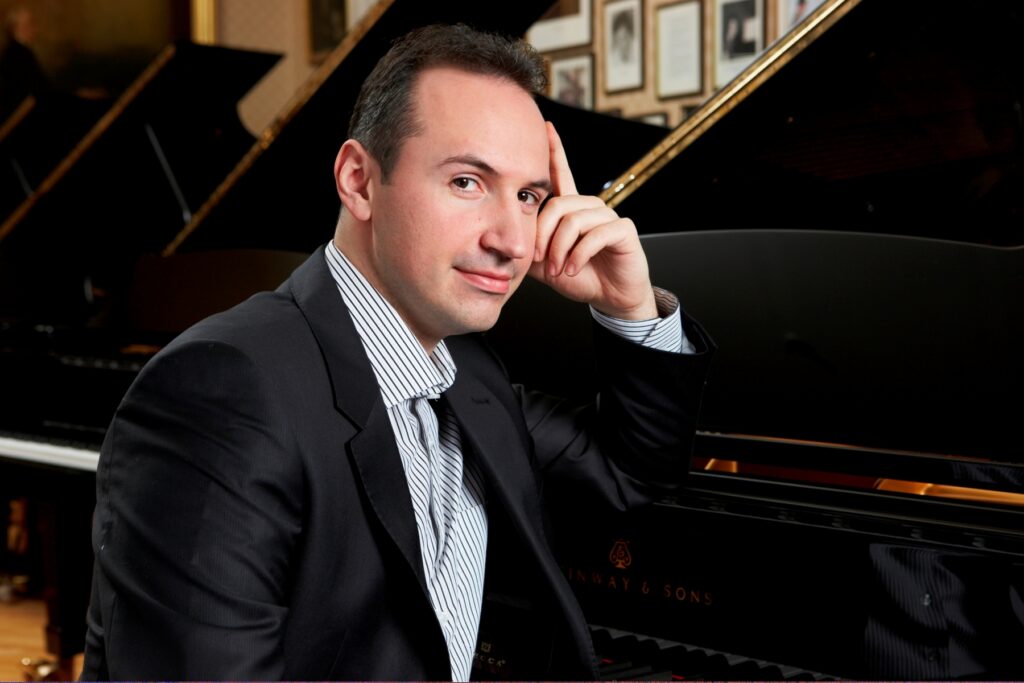
Simon Trpčeski performed Saint-Saëns’ Piano Concerto No. 2 with Gianandrea Noseda and the National Symphony Orchestra Thursday night at the Kennedy Center.
The National Symphony Orchestra opened the subscription series of its new season Thursday night. After a jam-packed gala concert last weekend, the Kennedy Center Concert Hall appeared only about forty percent full for this richly painted French program led by Gianandrea Noseda.
The dwindling audience is doubly sad because the orchestra’s sound continues to impress under Noseda’s care. The NSO began by reprising the Three Dances composed by Mélanie (“Mel”) Bonis as piano miniatures and later orchestrated, last heard at its 2024 season opener. Noseda gave the Pavane a dignified pacing, followed by a tender, even sad Sarabande. A spritelier Bourrée rounded out this trio of charming neo-baroque trifles from the early 20th century.
Simon Trpčeski took the stage as soloist in the Piano Concerto No. 2 of Saint-Saëns. This romantic piece showed a different side of the Macedonian pianist, who last visited the NSO in 2018 to play Prokofiev’s Piano Concerto No. 2. He sat at the keyboard for a time, allowing the audience to settle, before launching into the solo opening to the first movement, an imitation of Bach, which made a pleasing tie-in to the retrospective mood of the Bonis pieces.
Trpčeski has dramatic flair. He played the introduction unpredictably, with some surprise twists of rubato that kept the feel of improvisation. The more challenging parts of the first movement, delicate skeins of thirds and sixths in florid patterns, adorned the orchestral lines gracefully. After another broad cadenza, the opening idea returned, now solemn and wistful with a sense of nostalgia.
Timpanist Jauvon Gilliam opened and closed the Mendelssohnian second movement, a fun interplay with Trpčeski’s madcap melody. A showman at heart, Trpčeski did tend to exaggerate his movements for humorous effect, leaning off to one side as a line shot off the edge of the keyboard, or raising his hands after an accented chord as if the keys were boiling hot. Such movements mostly distracted without adding anything to the performance.
Little matter, however, with a finale taken at such a precipitous tempo that its triplet motif sounded almost like a buzz. While some of the many flowing scales might have been a little cleaner, Trpčeski leapt through all the piece’s technical hoops with panache, including tightly coiled trills that leapt up and down the keyboard relentlessly. A ferocious coda capped a noteworthy performance.
In a laudable gesture of collegiality, Trpčeski invited NSO principal cellist David Hardy to take part in a single encore, “The Swan” from Saint-Saëns’s The Carnival of the Animals. This music offered a moment of serene calm after the zany, Offenbach-like end of the concerto.
The highlight of the evening was Ravel’s scintillating score for the ballet Daphnis et Chloé, the composer’s longest single work, last heard in its complete version from the NSO with Yan Pascal Tortelier in 2021. Noseda’s handling of this music’s colors, both pastel and expressionistic, offered a suitable tribute to the composer’s 150th birthday, observed last March. The vast orchestra, including all of the principal woodwind and brass musicians who had mostly sat out the first half, filled the hall with a broad canvas of sound.
The Choral Arts Society of Washington, skillfully prepared by their director, Marie Bucoy-Calavan, sang the wordless choral part from the balcony above the stage. Their moaning sounds added a frisson of awe to the supernatural scenes especially, with voices crashing over waves of orchestral sound in some magnificent crescendo climaxes. Their long stretch of unaccompanied music, at the end of Part I, stayed admirably on pitch and in tune.
Numerous musical details popped out of the score from the grotesque trombone glissandi in the dance of Dorcon to the subtly deployed wind machine that signified the magical power of Pan. Eerie sounds abounded, and the brutal, pulsating menace of the pirates, who abduct and threaten to rape Chloé in Part II, thrilled the ear.
After a sunrise of silvery harps and flutes, accompanied by bird songs burbled by the various woodwinds, Daphnis and Chloé pantomimed the love story of Pan and Syrinx in tribute to the god’s magical aid. Principal flutist Aaron Goldman showed impressive breath control in both the long melodic sections and the daunting, rhapsodic runs up and down, trailing off as the deeper register of the alto flute took over. A turbo-charged Bacchanale brought this diverting piece, a monument of the early 20th century, to a violent close.
The program will be repeated 8 p.m. Friday and Saturday. kennedy-center.org
Leave a Comment