Music takes center stage at NSO’s sparkling season opener with Yuja Wang
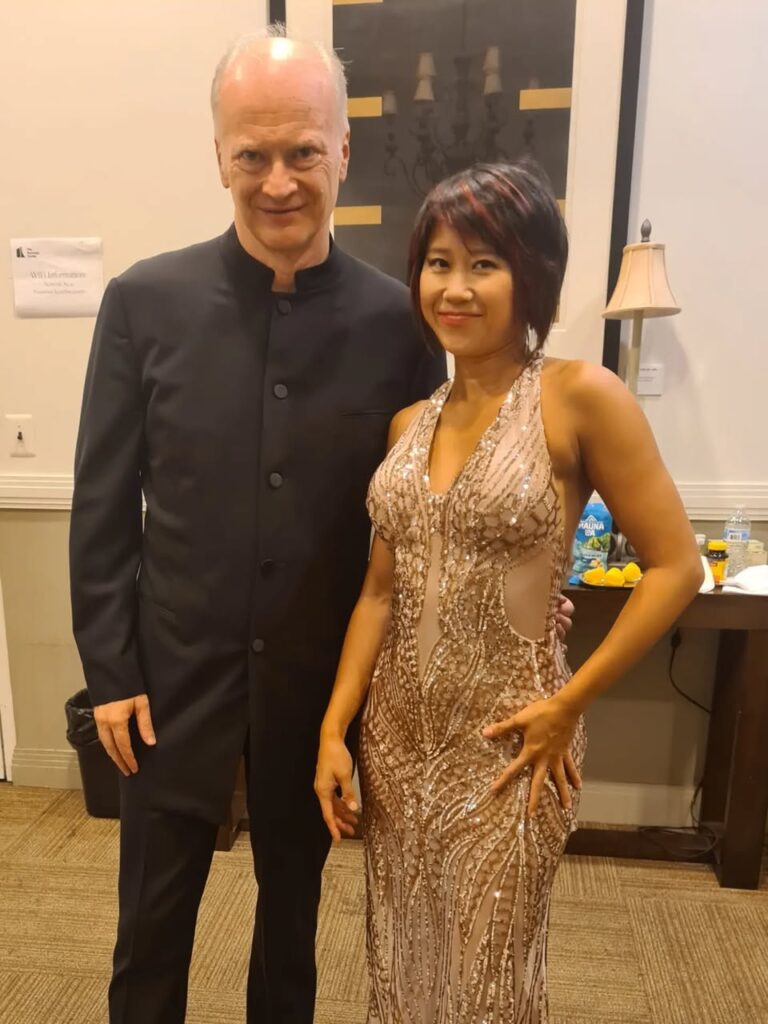
Yuja Wang joined Gianandrea Noseda and the National Symphony Orchestra to open the NSO season in a gala concert Saturday night at the Kennedy Center.
The National Symphony Orchestra opened its 95th season with a gala concert Saturday evening, just as it has for many years. The first gala since the Trump administration’s takeover of the Kennedy Center, however, did not always follow expectations. Rechristened by the new leadership as the Kennedy Center Gala (benefiting the NSO), the event featured many new faces among the five co-chairs, including television host Maria Bartiromo.
Happily, the musical portion of the evening proceeded in the accustomed way. Gianandrea Noseda, inaugurating his ninth season as music director, began with Copland’s Fanfare for the Common Man, following a rousing rendition of The Star-Spangled Banner. In the Copland, the brass offered heraldic, gleaming sound, solid from the opening bars in the trumpets and punctuated by solemn percussion. The piece made a fitting tribute to the Americans who volunteered to defend freedom and democracy in World War II.
The meditation on American history continued with Warmth from Other Suns, a string quartet by Carlos Simon, which he has arranged for string orchestra. Inspired by Isabel Wilkerson’s book about the Great Migration, the work traces in music the flight of black people from oppression in the Jim Crow South to northern cities. Simon, the Kennedy Center composer-in-residence since 2021, drew on a rich harmonic vocabulary, spiced occasionally with blue notes.
Noseda led the first movement (“Rays of Light”) with reserved poise, so that fragile colors emanated from the upper strings over a moving melody that began in the cellos. The playing of the musicians captured the poignancy of departure and resolution. Buzzing tremolos energized the second movement (“Flight”), a tense interplay of agitated motifs, evoking the unsettled nervous excitement of uprooting lives to travel great distances.
The more concise third movement (“Settle”) featured some ideas from the first movement, now smoothed out into a more bittersweet sound, concluding in a radiant major-mode sonority. The piece offered the chance to hear the newly burnished sound of the NSO string section, featuring four of the orchestra’s five new hires: assistant concertmaster Xiaoxuan Shi, assistant principal violist Dana Kelley, assistant principal cellist Raymond Tsai, and cellist Noah Krauss.
Fears that Trump-averse audiences would abandon the Kennedy Center this season, while still a concern, faded a bit at the sight of the amply filled Concert Hall. Much of the draw was likely due to superstar pianist Yuja Wang, who took the stage in a sparkling golden gown for Tchaikovsky’s Piano Concerto No. 1.
Wang’s blistering technique marked each of the three movements in its own way. A few minor slips in the little cadenza near the start of the first movement may have been related to the distraction of a patron who fell in the aisle and had to be carried by the ushers to a nearby seat. More than the virtuoso fireworks, Wang impressed with the delicacy of her soft touch, like a dreamy inner monologue in the movement’s tender second theme. The concluding cadenza proved a marvel, especially as Wang picked out a music-box theme over a thicket of figuration.
Noseda’s careful regulation of orchestral balance showcased Wang’s handling of the slow movement’s tragic theme, in spite of some woodwind tuning issues after a lovely opening flute solo. Wang’s fingers flowed with consummate lightness through the Prestissimo middle section, some of the concerto’s most demanding passages.
Wang’s impetuous nature put the fire in the Allegro con fuoco finale, as she often raced ahead of Noseda and the NSO, creating some fitful havoc. With thundering octaves, she even found a last reserve of acceleration for a brilliant finish. Not willing to let Wang go without one of her spectacular encores, the audience received a doozy in Samuil Feinberg’s dizzying transcription of the Scherzo from Tchaikovsky’s Symphony No. 6 (“Pathétique”).
Most of the audience insisted on taking an intermission, although none was listed in the program. After a brief pause to remove the piano from center stage, the NSO concluded the evening with more typical gala fare.
The Largo movement from Dvořak’s Symphony No. 9 (“From the New World”) offered some fine English horn playing from Andrea Overturf of the San Diego Symphony (substituting for Kathryn Meany Wilson, who is on a leave of absence), and Rimsky-Korsakov’s Capriccio Espagnol featured excellent solos from concertmaster Nurit Bar-Josef, flutist Aaron Goldman, and oboist Nicholas Stovall, who has returned from last season’s leave of absence.
One improvement in this year’s gala was the lack of speeches from board members, which normally distract from the music with thank yous and an accounting of the generous donations received. Other than Noseda’s brief comments on the program, the talking was wisely reserved for the dinner upstairs. Decorum was thankfully preserved as well, with no episodes of booing or other discontent.
Gianandrea Noseda conducts a complete performance of Ravel’s Daphnis et Chloé and pianist Simon Trpčeski performs Saint-Saëns’ Piano Concerto No. 2, at 7 p.m. October 2 and 8 p.m. October 3 and 4. kennedy-center.org
Leave a Comment