American music closes NSO season in style as uncertainty reigns about the future
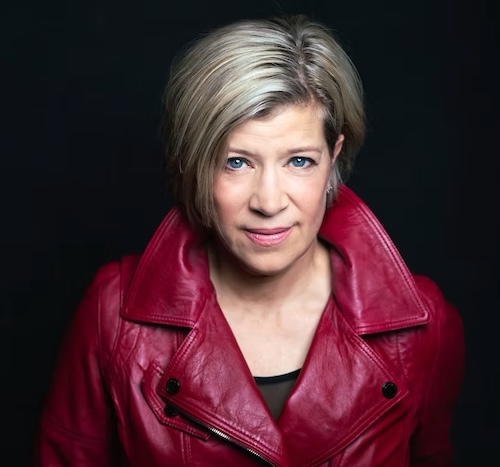
Karen Kamensek conducted the National Symphony Orchestra in an American program Friday night at the Kennedy Center. Photo: Todd Rosenberg
On Friday night, the National Symphony Orchestra played its final concert of the season, and perhaps its last for a long while at its home, the Kennedy Center Concert Hall.
Guest conductor Karen Kamensek, making her NSO debut, led the all-American program, part of the Kennedy Center’s celebration of the 250th anniversary of the Declaration of Independence. With no 2026-2027 season announced for the orchestra as it prepares for a potential two-year closure of the Kennedy Center, the concert also felt like an occasion to celebrate the NSO itself and its status as a cornerstone of Washington classical music.
Back in the fall, when the present season was announced, this program was to feature the world premiere of Philip Glass’s Symphony No. 15, “Lincoln.” In January, though, Glass pulled out, writing, “Symphony No. 15 is a portrait of Abraham Lincoln, and the values of the Kennedy Center today are in direct conflict with the message of the Symphony.” The NSO patched the hole in the program with Adam Schoenberg’s American Symphony and Aaron Copland’s Lincoln Portrait.
Adam Schoenberg (no relation to Arnold) writes that the American Symphony was inspired by Copland’s Third Symphony as well as “the 2008 presidential election, where both parties asked the people to embrace change and make a difference.”
American Symphony opens with a “Fanfare” movement so bright and fast it seems almost weightless. The composer’s program note refers occasionally to inspiration from electronic music, and a lot of this symphony develops as passages repeat unaltered with different elements layered on top of them, similar to a pop song, rather than through traditional harmonic movement.
Sometimes, this technique paid off. An insistent rising phrase in “Prayer,” the fourth movement, gave a feeling of unsettled stasis that lent poignancy to the affecting solos by the oboe and clarinet, well-shaped by Kamensek and the NSO. On the other hand, in the “Rondo” third movement, the NSO sounded nimble in repeated complex rhythmic patterns, but the music didn’t generate much momentum. The last movement, “Stars, Stripes, and Celebration,” gradually builds up its musical materials from angular harmonies and restless phrases into a satisfyingly loud, glittering denouement from the NSO.
Lincoln Portrait is not Copland’s strongest piece—the song “Camptown Races” just does not work as load-bearing musical material. Yet the words of Lincoln, as read by the narrator in the work’s final section, never fail to stir the heart.
Kamensek and the NSO adeptly shaped the portrait’s instrumental portions, leading into actor and operatic bass Zachary James’ commanding reading of the texts Copland selected. James has a voice dark and rich as burnished walnut, and it didn’t seem to need much amplification to fill the Concert Hall. His musical background doubtless helped him find the rhythm in the texts and to work hand-in-glove with Kamensek and the orchestra as they punctuated and amplified his words, building to an inspiring climax on the closing of the Gettysburg Address: “government of the people, by the people, for the people, shall not perish from the earth.”
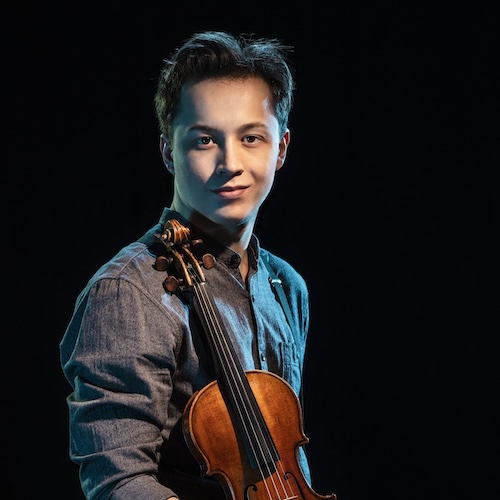
Johan Dalene performed Barber’s Violin Concerto with the NSO Friday night.
After intermission, the originally scheduled program resumed, with Norwegian violinist Johan Dalene making his NSO subscription debut in Samuel Barber’s Violin Concerto, one of the summits of American orchestral composition.
This concerto’s opening challenges the violinist not to navigate fearsome figuration but to instantly conjure an intimate, wistful mood. Dalene played the notes, but with a bright tone color that sounded like a shout where a whisper was needed. Indeed, the first movement buzzed by without much depth, despite Kamensek and the NSO providing supportive accompaniment.
The Andante sostenuto fit his talents better, demanding more straightforwardly ardent playing, matched by Kamensek and the orchestra, particularly in the reflective, lush opening oboe solo. In the Presto finale, though, Dalene got a tick behind the orchestra at times, making the music less exhilarating than it can be.
Dalene sounded significantly more relaxed and comfortable in his encore, the Scherzo from Fritz Kreisler’s Recitativo und Scherzo-Caprice, finding playfulness in its virtuoso demands.
Less serious in mood than anything else on the program, George Gershwin’s An American in Paris also posed the greatest challenge—switching seamlessly between classical and jazz phrasing.
Here the NSO truly shone, with Kamensek leading a performance that sounded idiomatic no matter the idiom. Gershwin’s infectious melodies bounced merrily along, the musicians played precisely yet with an easy swing, and the humor was infectious.
It takes a lot of skill to make something this complicated sounds so light and breezy. Regardless of what comes next for the National Symphony Orchestra, the Gershwin performance closed this season on a high note.
The program will be repeated 8 p.m. Saturday. kennedy-center.org
One Response to “American music closes NSO season in style as uncertainty reigns about the future”
Leave a Comment

Posted Jun 15, 2026 at 7:54 am by C Kalosy
NSO plays such an integral part in contributing to the overall enrichment, development and sustainability of our human community, providing a unique platform to share cultural diversity by sharing the beautiful music performed by such talented musicians & artists. The arts should be cherished, celebrated and supported. My family has been fortunate enough to experience the joy of attending concerts where symphony orchestras not only collaborated with other musicians, songwriters and performers but through their collective music touched the soul of every person attending the concerts. Such powerful and positive emotion brings us closer together as a collective community.