NSO gives jazz flavor to the start of summer under conductor Gray
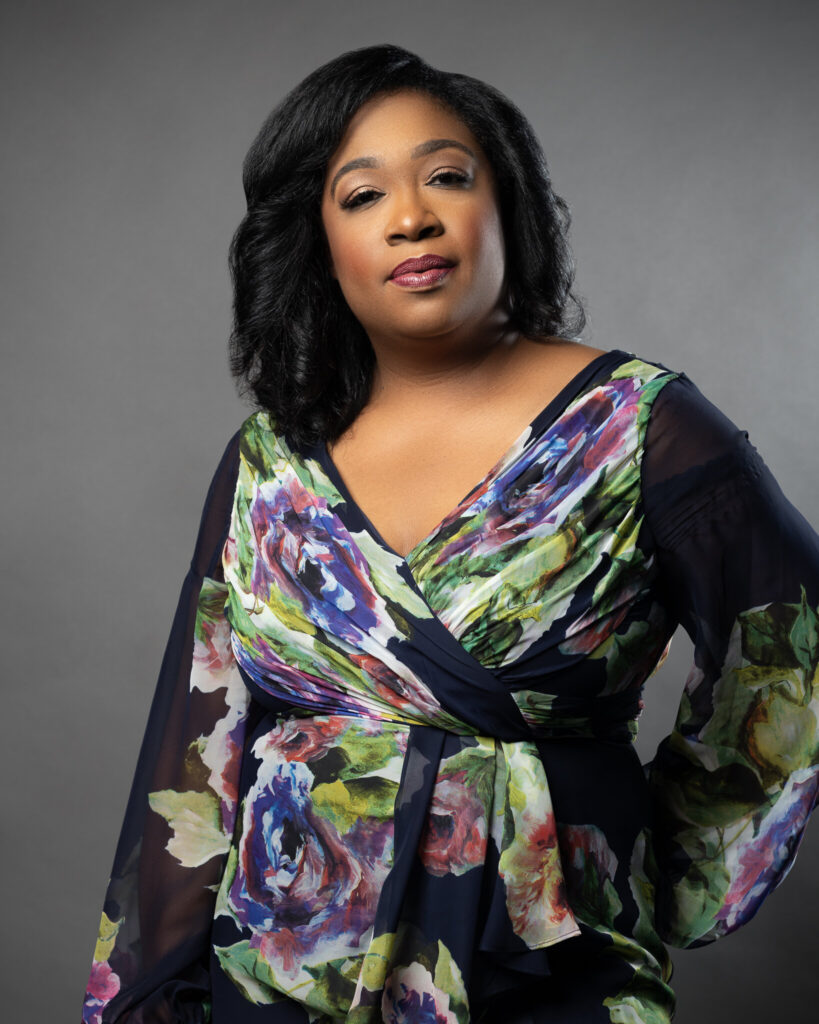
Michelle Cann performed Ravel’s Piano Concerto in G major Friday night with the National Symphony Orchestra.
The National Symphony Orchestra played their penultimate program of the season Friday evening in the Kennedy Center Concert Hall. Kellen Gray, the South Carolina-born artistic director of the Lafayette Symphony Orchestra in Indiana and artistic associate of the Royal Scottish National Orchestra, led a rather long evening of jazz-influenced music with many program changes.
Pianist Michelle Cann, last heard with the NSO in the Florence Price Piano Concerto in 2023, was originally scheduled to give the world premiere of Valerie Coleman’s Piano Concerto on this program. According to the composer’s management, Coleman completed the score but “it was decided collectively that for the success of the work, it required more preparation.” The world premiere will now take place in August at the Colorado Music Festival.
Cann performed Ravel’s Piano Concerto in G Major instead, a score that fit smoothly into the evening’s jazz-centered theme. From the opening whip crack of the first movement, Cann accentuated the piece’s rhythmic drive and flashy fingerwork, giving the faster sections of the first movement a hard-edged quality reminiscent of Stravinsky. The harpist’s dreamy introduction to the extended cadenza section set a dream-like tone for Cann’s buzzing trills.
Ravel gave the soloist a heavy lift in the extended solo introduction to the slow movement. Cann played this section in a disappointingly plain manner, not giving enough difference to the offbeat metric shift in the left hand. The playing lacked a distinctly French sort of transparency. She also tended to rush the pacing, which the NSO musicians in their own solos, tugged against. Guest English horn player Kara Poling, of the Richmond Symphony, made an especially poignant contribution.
The raucous but brief third movement featured impressive runs and arpeggiation from Cann, again with an incisive, assertive quality, answered by brash woodwind solos. The pianist extended the sense of a jazz-classical mashup with a signature encore, Hazel Scott’s Art Tatum-styled adaptation of Liszt’s Hungarian Rhapsody No. 2, a transcription of which Cann has often played, in this case with a sly wink to the audience.
The concert should also have included the world premiere of a new piece by Catherine Elizabeth. Just as Philip Glass did with his Symphony No. 15, originally planned for next week’s program, the composer withdrew her piece as a protest against President Trump’s takeover of the venue. As it turned out, the substitution of Darius Milhaud’s La Création du monde, rarely heard in its original 18-part instrumentation, proved a highlight of the evening.
Guest artist Stacy Wilson gave a mellifluous spin to the alto saxophone solo, a key part of this ballet score composed after Milhaud heard jazz on a trip to Harlem in 1922. Pianist Lisa Emenheiser, bass player Robert Oppelt, and percussionists Scott Christian and Erin Dowrey all added idiosyncratic elements. The effusive conclusion, with its pulsating rhythms that grew to a shattering volume, was capped by Aaron Goldman’s flutter-tongued flute solo and some glistening chords.
The only scheduled world premiere that did occur was Charles Lumar II’s Elaine Eclipse, an orchestral adaptation of the string quartet he composed for his mother’s funeral. This seven-minute version featured significant solos for the tuba, one of the composer’s own instruments, and remained largely in a neo-tonal harmonic idiom. A funky repeated bass line and other jazz elements fit well into the context of the reconfigured program, but the piece did not make much of an impression.
Catfish Row, the symphonic suite from Gershwin’s Porgy and Bess, made an apt conclusion to the concert. Highlights included concertmaster Nurit Bar-Josef’s sweetly intense rendition of “Summertime” in the first movement. The twang of the banjo gave an authentic southern feel to “Porgy Sings,” with a fine solo by assistant principal cellist Raymond Tsai linking the two songs together. Audience applause after the rousing conclusion of the “Hurricane” movement indicated that the last movement, “Good mornin’, Sistuh” probably should have been omitted.
With the substitutions, the concert did run on the long side. Given the resulting prominence of jazz over folk music as a programming theme, the concert opener, Dvořák’s American Suite, now felt unnecessary. The NSO musicians played it with nostalgic fervor, although here more than elsewhere, Gray’s sometimes hazy downbeat caused a few ensemble troubles, especially in the jaunty third movement.
________
Meanwhile the politically instigated turmoil at the center continues.
As reported last week, a judge ordered the Kennedy Center to remove President Trump’s name from the building’s signage. Electronic displays seen last night no longer identify the venue as the “Trump Kennedy Center,” but other instances of the renaming, including the most prominent one on the façade, were still in place. According to the judge’s order, all references to Trump’s name must be removed by June 12, which KC leadership has reportedly pledged to accomplish.
The order also halted the two-year closure of the Kennedy Center, planned for next month. Trump initially claimed he would relinquish control of the venue, but he has since walked that renunciation back, leaving the future of the NSO in even greater peril. Reports earlier this week claimed that the NSO has not announced its plans for next season because KC leadership refuses to approve its budget, effectively freezing the orchestra’s ability to sign contracts.
The program will be repeated 8 p.m. Saturday. kennedy-center.org