Fairfax Symphony Orchestra closes season with a worthy all-Prokofiev program
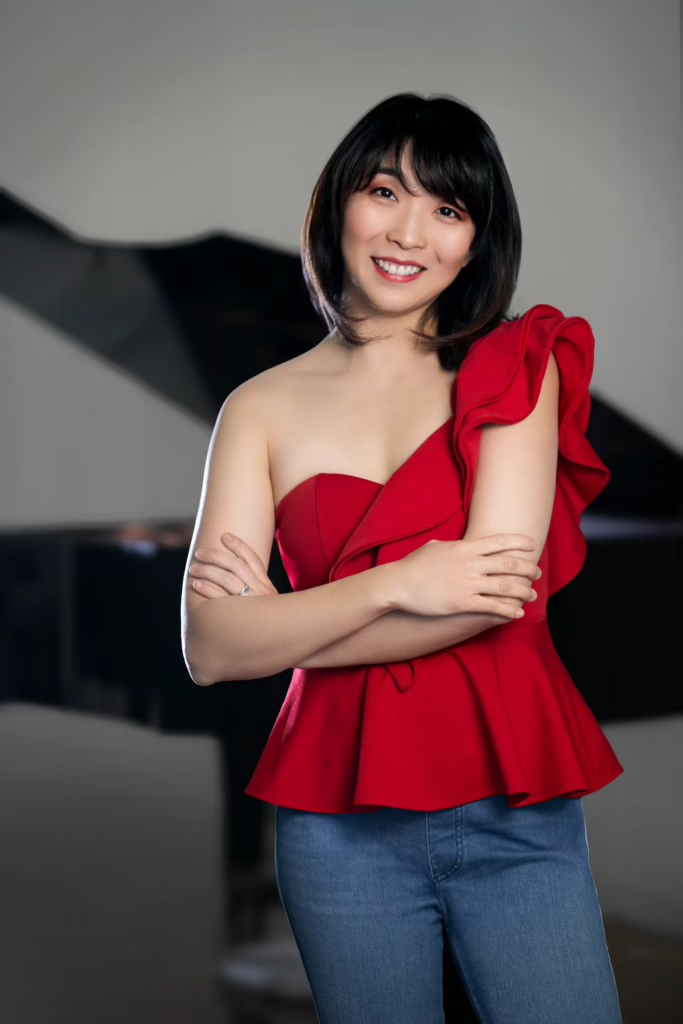
Claire Huangci performed Prokofiev’s Piano Concerto No. 3 with the Fairfax Symphony Orchestra on Sunday. Photo: Mateusz Zahora
The Fairfax Symphony Orchestra concluded their season with a valiant showing in a challenging all-Prokofiev program led by music director Christopher Zimmerman Sunday at George Mason University’s Center for the Arts.
The concert began with the Second Suite of selections from Prokofiev’s celebrated ballet Romeo and Juliet. The iconic theme of “Montagues and Capulets” started off a bit tentatively but quickly found the depth and piercing quality that makes it so memorable. The rest of the movement was marked by sinister brass and lovely woodwind timbres.
“Juliet the Young Girl” featured virtuosic violins and subtle percussion, which was perfectly unified with the low strings. “ The Death of Tybalt” and “Romeo at Juliet’s Grave,” displayed a well-balanced, colorful sound, bringing Prokofiev’s masterful orchestration to life. Stand-out performers in these movements include cellist Natalia Vilcis, flutist Lawrence Ink, and harpist Madeline Jarzembak. The finale concluded with sensitive string playing conveying the tragedy of the ill-fated lovers.
The stage was then reset in preparation for Prokofiev’s Piano Concerto No. 3 in C major, Op. 26, with Claire Huangci as soloist. The first movement was launched with a brilliant clarinet solo, and Huangci displayed impressive flexibility and remarkably clean articulation, perfect for Prokofiev’s music. Zimmerman brought the driving strings to the forefront of the soundscape, though there were occasional moments where the orchestra covered the piano.
The second movement, a theme and variations, began with a clear, dramatic melody. Huangci’s playing initially erred on the side of overly careful, but she achieved an exceptionally mysterious, dark piano color later in the movement, supported by translucent pianissimo strings. The brass section stood out particularly in this movement with a biting, sardonic edge. For some, Prokofiev’s music can be difficult to grasp, yet Zimmerman and Huangci displayed complete mastery over this repertoire with strong phrasing that elucidates Prokofiev’s most nebulous musical ideas.
The final movement—a fiery “argument” between soloist and orchestra (as Prokofiev describes it)—requires incredible focus from conductor, pianist, and orchestra alike. Huangci took confident control of this movement, with her bold playing complemented by warm, tender low strings. Sometimes Prokofiev’s challenging mood shifts could have been delineated more clearly by the orchestra; however, Zimmerman excelled in handling the rapid-fire tempo changes of Prokofiev’s orchestral writing.
Zimmerman spoke briefly about the final piece of the concert, Prokofiev’s Symphony No. 5, which was written in the Soviet Union over the course of one month in 1944. Zimmerman noted that it pays tribute to the Soviet Union’s “war machine” by both “praising it and undermining it,” and that the finale seems to evoke a “musical representation of what AI might become.”
Thus began the first movement of Prokofiev’s Symphony No. 5 with a warmly moulded woodwind opening and a lush, romantic string sound. Zimmerman achieved strikingly bold orchestral colors at dramatic moments. Prokofiev’s music requires strong and attentive percussion players, and fortunately, the five-piece section, led by principal Alex Garde and associate principal Mike Gatti, were up to the task.
The excellent percussion playing continued into the second movement, joined by bright string colors and strong low brass. The Adagio third movement further promotes the dark atmosphere that Prokofiev’s music displays. In this movement, the violins were the strongest players, embodying a wide range of timbres, from desperate to tender. Unfortunately, the orchestra seemed to lose some focus and grip in this movement, with drama becoming more lackluster.
The final movement, Allegro giocoso, featured stand-out performances from the low strings and impressive endurance from the horns, who kept the long staccato passages steady and consistent. The finale was exactly as Zimmerman promised, bright, full, mocking, and off-the rails.
Sunday’s concert marked the final event for two retiring Fairfax Symphony musicians. In spoken remarks after intermission, Zimmerman acknowledged the longtime contributions of concertmaster David Salness, who has held that position for 28 years, and horn player Greta Richard, a 25-year orchestra member.
Leave a Comment