Worlds collide, enjoyably, with NSO in Loussier, Bach and Mozart
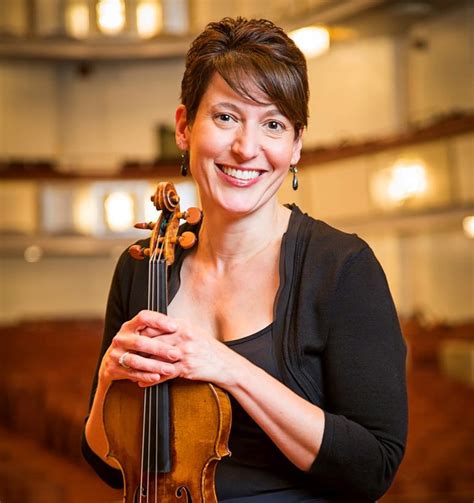
Marissa Regni was the soloist in Jacques Loussier’s Violin Concerto No. 2 with the National Symphony Orchestra Wednesday night at the Kennedy Center.
Jacques Loussier would likely have been tickled to see his Concerto No. 2 for Violin and Tabla alongside works by Johann Sebastian Bach and Wolfgang Amadeus Mozart on Wednesday evening’s National Symphony Orchestra program, led by music director Gianandrea Noseda at the Kennedy Center Concert Hall. An inspired performance from soloist Marissa Regni, principal second violin of the NSO, made Loussier’s concerto sound worthy of such august company.
Loussier, who died in 2019 at the age of 84, first came to fame as a pianist leading a jazz trio in improvisations on classical music, especially Bach. Loussier’s takes often charm the ear, while his best tracks reveal something new about their inspirations. In a similar mode, his Second Violin Concerto creates playful tension between a small string orchestra, which tries to play a traditional concerto role, and the violinist, who explores other modes with support from the tabla.
In the first movement, the orchestra played its swoops and swoons straight, while Regni showed perfect comfort sitting just behind the beat with her swaggering melody. Tabla performer Robert McEwan ably assisted in the goal of destabilizing the situation, until the jazz mode won out, with Regni tossing off her blue notes with elan and the NSO’s basses plucking deft accompaniment.
After a bed of hazy string chords opened the second movement, Regni entered with a coolly swinging melody, McEwan gently pushing it along. A brief tango interlude, spiked by some sul ponticello playing from the orchestral strings, led to a more upbeat theme that closed the movement on a contented note. During a short cadenza, McEwan finally got to play a little melody on his pitched instrument.
Regni had most opportunity for fireworks in the finale, which she and Noseda took at a blistering pace. Regni played nearly continuously in a whirl of motion, making the music more exciting as the demands piled up. While her command of Loussier’s idiom never faltered. Noseda and the orchestra kept up with her all the way to the final bar.
Before Loussier, there was Bach, specifically the Brandenburg Concerto No. 1. The NSO went semi-Baroque for the performance, with a greatly reduced string section; all the musicians stood at their stands, apart from the low strings, bassoon, and harpsichordist. Noseda was on the podium, but stated later in the concert that he had provided minimal direction.
The musicians could have used more guidance, as balance issues plagued this performance. In the first movement, concertmaster Nurit Bar-Josef’s violin was often inaudible, as was the harpsichord; other times, the horns overwhelmed the ensemble, or the oboes faded into the background in duets. One missed the relatively transparent sound of a period ensemble. The best moments came in the second movement, where Bar-Josef and the oboes traded their slow melody in a way that everyone could hear.
When Regni came out after the concerto to lead the second violins in Mozart’s Symphony No. 41, the audience gave her an additional burst of applause.
Noseda led a performance that burst with intensity, starting with opening chords so emphatic and quick that they almost sounded brusque and forging ahead from there. What could have been a wild ride with a lesser orchestra instead felt exhilarating because of the clarity and concentration of the NSO’s playing. Noseda relaxed the tempo in the slow movement, but deftly wrung the emotion from the sighs and growls that disturb its otherwise wistful melody, with particularly affecting string playing from the NSO.
The orchestra found a lovely dance rhythm in the Minuet that made it feel lighter than the preceding movements, an oasis even more welcome when Noseda and the NSO pressed the tempo once again in the finale. At a couple moments in the development, the ensemble started to fray from the pressure of churning through all that counterpoint at speed, but for the most part the orchestra maintained the clarity and concentration of the first movement to deliver a thrilling performance, ending with an incandescent rendition of the famous fugal coda.
The program will be repeated 7 p.m. Thursday and 8 p.m. Friday. kennedycenter.org/nso
Leave a Comment