Noseda leads NSO in somber Brahms rarities and buoyant Schumann
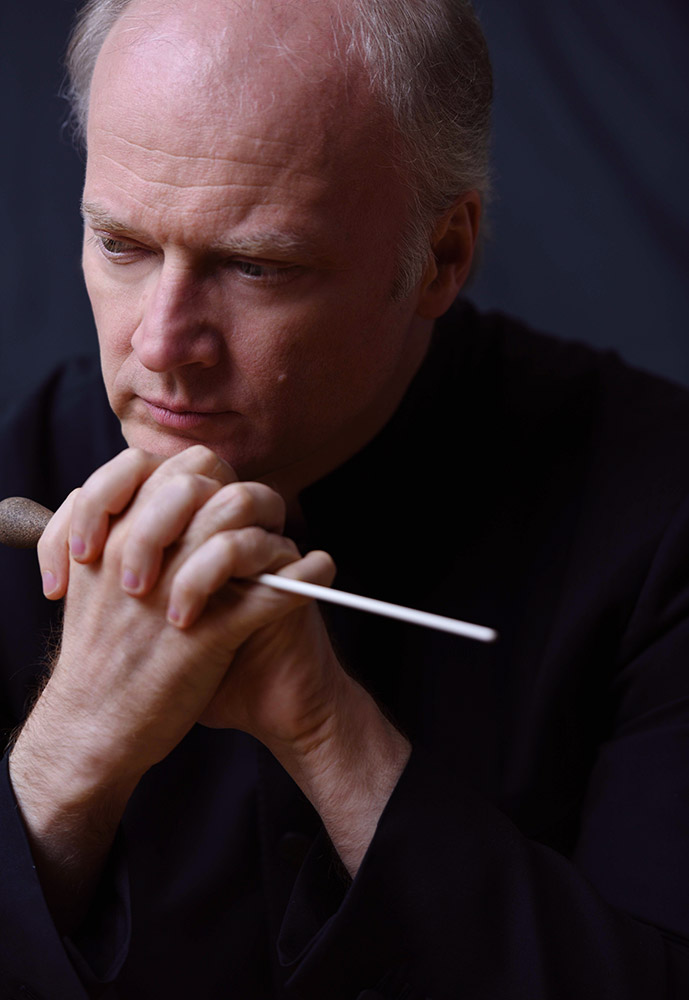
Gianandrea Noseda led the National Symphony Orchestra Thursday night at the Kennedy Center. Photo: Stefano Pasqualetti
The National Symphony Orchestra’s slate of concerts in January features a mini-festival, as music director Gianandrea Noseda described it last week, dedicated to the music of Brahms. For this week’s program, heard Thursday night in the Kennedy Center Concert Hall, Noseda focused on the German composer’s choral music.
Instead of yet another performance of the German Requiem, Noseda stitched together three shorter but still substantial works for choir and orchestra. The combination centered on the theme of fate, death, and mourning, and the chance to hear these three lesser-known works proved as enjoyable as it was rare. Noseda, in his charming Italian accent, described the experience as “a unicorn.”
Brahms knew choruses well, having directed first a women’s chorus early in his career in Hamburg and then the celebrated Wiener Singakademie after he moved to Vienna. He continued to write for chorus even after he left choral conducting behind, and these later works show his prowess at composing for amassed voices.
In the earliest of the three pieces, Schicksalslied (Song of Destiny), Brahms set a disturbing poem by Friedrich Hölderlin, which contrasts the happiness of the blessed in heaven with the fate of us left on earth, blinded and condemned to suffering. The NSO strings gave a plush warmth to the introduction, followed by a unified, balanced sound from the hundred or so voices of the Washington Chorus, well prepared by director Eugene Rogers. (Brahms’ manuscript copy of this piece is held by the Library of Congress.)
For the third stanza, reflecting the shift to the unfortunate left on earth, Noseda amped up the volume with potent brass. The choral singers and musicians united deftly on the shifting accents Brahms imposed, creating a sense of metric dissonance. Noseda’s only misstep in the piece was not to take more time before the return of the blissful opening music. This gesture, acting against the poem’s bleak conclusion, gains significance by its delay.
In between the Brahms pieces came baroque miniatures, beginning with Vivaldi’s Sinfonia “Al Santo Sepolcro,” an expression of grief at the entombment of Christ. A small string ensemble, just two or three desks on each part, played the piece, largely senza vibrato. The dramatic dissonances of the first movement did not exactly soar, and Noseda’s emphasis on exaggerated expressive devices felt overdone.
The funereal lament made an apt introduction to Brahms’ Nänie, a setting of a poem by Friedrich Schiller, not so much about the death of a person as about the death of beauty. Again Noseda could have taken more time with the tender opening line of the piece, which returns at the poem’s crucial line, underscored through repetition by Brahms, that “to be a dirge on the lips of loved ones can be a marvelous thing.” Both choir and orchestra gave this statement of artistic grief a sense of poised anguish.
The second baroque insert, the Sinfonia from Bach’s Cantata No. 21 (Ich hatte viel Bekümmernis), featured poignant solo turns from principal oboist Nicholas Stovall and concertmaster Nurit Bar-Josef, again backed by a small string ensemble. Thought to have begun existence as the slow movement of an earlier oboe concerto, the score worked better than the Vivaldi had as a transition to the last Brahms piece. Noseda’s request that the audience not applaud until the end of the first half joined these various works into a mini-oratorio of grief.
Noseda again brought out the forceful side of the NSO brass in the latest of the three Brahms pieces, Gesang der Parzen (Song of the Fates), set to words of Goethe. With both the alto and bass section divided into two parts, Brahms created intricate harmonies in this complaint against the gods, who remain feasting at their golden table while humans suffer. As the piece wound its way down into the depths, the contrabassoon croaked among many other deep sounds.
As an antidote to the bleak outlook of the Brahms pieces, Noseda turned to Robert Schumann’s Second Symphony. Brass fanfare ideas brightened the slow introduction to the first movement, leading to a heroic fast section. The more contrapuntal textures of the development again recalled the baroque pieces on the first half, a fine touch in Noseda’s programming to draw attention to the love of counterpoint shown by both Brahms and Schumann.
Noseda’s exceedingly fast tempo made the second movement a bit breathless, with the running notes of the first violins blurring together, especially in the even faster coda. More relaxed tempos in the two trios provided some much needed contrast. The highlight came in the longing romantic lines of the slow movement, especially plangent in the violins, French horns, and clarinets, albeit some minor intonation issues in the oboe solos.
The Finale also moved remarkably fast, so that the quotations of music from earlier movements became somewhat unrecognizable. Still, once some serenity returned to the piece, Noseda expertly guided a triumphal conclusion of the piece in C major. Although the outcome sounded heroic and uplifting, Schumann’s final descent into madness hung in the background, a reminder of the bleakness, more realistic than pessimistic, of the Brahms works on the first half.
The program will be repeated 8 p.m. Friday and Saturday. kennedy-center.org
Leave a Comment