Bignamini returns to the NSO with Americana, bold romanticism

Jader Bignamini conducted the National Symphony Orchestra Thursday night at the Kennedy Center.
The first time that Jader Bignamini came to conduct the National Symphony Orchestra, he was a last-minute replacement for an ailing Gianandrea Noseda.
Bignamini returned to the podium of the Kennedy Center Concert Hall Thursday night for a pleasing program that was half American and half late romantic. While the combination may have looked anodyne on the page, in the hall there was plenty for the ear to appreciate.
The brass and percussion sections, on stage for the first fanfare piece by Wynton Marsalis, opened the evening with a rendition of the national anthem, now de rigueur at the Kennedy Center. As has been the practice, the musicians performed the Star-Spangled Banner without the aid of a conductor and did so impeccably.
Bignamini, who has served as music director of the Detroit Symphony Orchestra since 2020, has gotten to know American music there. He and the DSO released a recording of Wynton Marsalis’ Blues Symphony earlier this year. In this program Bignamini led the NSO’s first performance of the composer’s Herald, Holler, and Hallelujah, from 2022.
The compact piece makes an intriguing program alternative to Copland’s Fanfare for the Common Man, mixed with trombone slides and other flavors from New Orleans. The spirit of America’s greatest musical city came across especially in the concluding section, with the nineteen musicians evoking a big band’s hot brass. Although the Italian maestro’s conducting seemed a bit square for this music, the performers brought out the swing elements vividly.
Our country’s other greatest city, New York, featured in Gershwin’s Concerto in F, in which the rhythms and harmonies of jazz are refracted through the composer’s Jewish heritage and work on Tin Pan Alley. Hélène Grimaud took the solo part, with some beautiful moments as well as some minor technical shortcomings. Neither the French pianist nor the conductor seemed entirely comfortable with the elements of Charleston, blues, or ragtime.
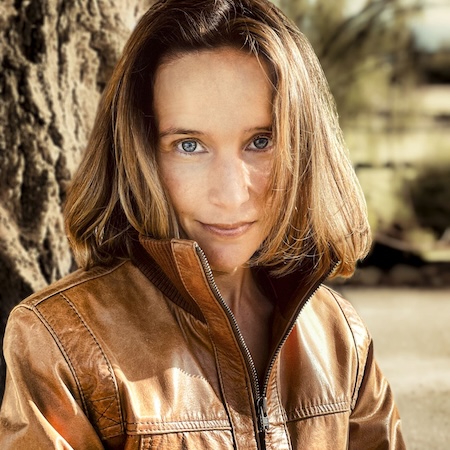
Hélène Grimaud performed Gershwin’s Concerto in F with the NSO Thursday night. Photo: Mat Hennek/DG
Grimaud caught some of the cool ease of the first movement’s solo sections. Bignamini kept a tight control over the orchestral sound, often reining in the orchestra even when it had the lead melodic lines, so as to hear every accompanying figure in the keyboard. Principal trumpet William Gerlach brought the most character to his colorful, raspy-voiced solo part in the smoky second movement.
The tempo of the third movement never quite settled into place, with Grimaud often racing ahead of the orchestra. Bignamini, who has a patient and clear beat, always kept the ensemble together. After a rousing conclusion and several ovations, Grimaud offered a somber encore, the Bagatelle No. 2 by Ukrainian composer Valentyn Silvestrov. The folkish style of the piece made an apt allusion to Gershwin’s grandfather, who was born in Odessa.
Bignamini excelled in two ultra-dramatic works on the second half, beginning with Richard Strauss’s Don Juan. The brass section, who faced the evening’s greatest demands, gave yet more fire to the swashbuckling episodes of this magnificently orchestrated piece, especially the potent horn section in the hero’s main theme. The woodwinds and strings glowed ardently in the love scenes, guided by heart-melting rubato freedom sculpted by Bignamini. The violin section sounded vibrant and unified, led by the tender solo playing of concertmaster Nurit Bar-Josef.
After lust leading to death came Tchaikovsky’s Romeo and Juliet, about true love leading to death. Bignamini drew out twilight softness in the opening section of music, with hymn-like playing from woodwinds and strings, punctuated by delicately placed harp figuration. The fast music representing the strife between the Capulets and the Montagues felt crisply coordinated and fine-edged. Where the musicians took their time with the somber opening music, Bignamini did not let them wallow in the soaring love theme, another sign of his well-honed sense of dramatic pacing.
The program will be repeated 11:30 a.m. Friday and 8 p.m. Saturday. kennedy-center.org
Leave a Comment