Under Rouvali, Philharmonia sounds fresh and vital on 80th anniversary tour
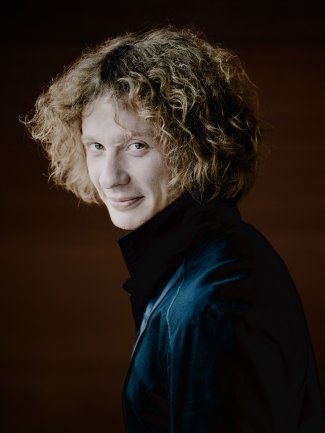
Santtu-Matias Rouvali conducted the Philharmonia Orchestra Monday night at the Music Center at Strathmore. Photo: Marco Borggreve
London’s Philharmonia Orchestra returned to the Washington area for the first time in over twenty years, part of a North American tour to mark its 80th anniversary. Although founded relatively late for a top European orchestra (in 1945), the ensemble has set a high standard in widely heard recordings over the years. Monday night’s concert, presented by Washington Performing Arts in the Music Center at Strathmore, offered the chance to hear their current sound.
Santtu-Matias Rouvali, who turns 40 next month, succeeded Esa-Pekka Salonen as principal conductor four years ago. The Finnish conductor’s program showcased the polyglot range of his musicians, with music from a living Mexican composer and French and Finnish masterpieces. (Marin Alsop, the ensemble’s principal guest conductor, is also leading some of the North American tour concerts in a different program.)
Gabriela Ortiz, who grew up playing folk music with her musician family, composed Si el oxígeno fuera verde (If oxygen were green) for the Philharmonia, who premiered it in September. She has said that her inspiration was from the word “Clorofila,” the stage name of a Mexican musician she admires, but also the word for the life-giving substance in plants, called chlorophyll in English. A busy motoric pulsing characterized most of the piece, starting with high harmonic arpeggiations in the violins punctuated by glockenspiel dings.
The woodwinds expanded the texture, with brass added as the volume increased. Rouvali, who conducts with a large baton, kept the score on an even keel, including when Ortiz deployed a large amount of Latin-infused percussion in the most exciting section. The score, like Ortiz’s work performed by the NSO last season, diverted the ear, but repeated patterns and a sameness to the pacing and rhythm made the music seem glib in the end.
The use of a few whipcracks toward the end of the Ortiz piece made an apt tie-in to Ravel’s Piano Concerto in G Major, which opens with that same effect. The lighter orchestration showcased a cross-section of the musicians, who under Rouvali’s careful guidance produced a characteristic French sound with flavorful hints of Stravinsky and jazz.
The evening’s soloist, Víkingur Ólafsson, played the solo part ably, if somewhat coolly. The Icelandic pianist gave a sharp technical edge to the outer movements, but in the first movement the most moving musical elements came from the orchestra. The harpist’s cadenza toward the end, with glissandos shimmering over a ghostly melody, set up the soloist’s longer cadenza. Ólafsson’s particularly polished trills in the cadenza recalled the flutter-tongued sounds from flute and trumpet earlier in the movement.

Víkingur Ólafsson performed Ravel’s Concerto in G major Monday night. Photo: Markus Jans
Ólafsson’s clinical distance from the score disappointed most in the smoky second movement, which opens with an extended section for the soloist alone. The pianist did little with it in terms of variety of rubato or touch, again outshone by a spectacular English horn solo in the final section, in which Rouvali gave room for rubato expansion. On the other hand, Ólafsson’s insistence on a thrilling Presto pacing in the third movement brought plenty of excitement, matched by raucous calls from the E-flat clarinet.
Ólafsson’s celebrated subtlety and delicacy of phrasing came out much more in the encore he offered. The pianist suspended time with a gently arching rendition of the “Entrée de Polymnie, des Muses, Zéphirs, Saisons, Heures et Arts.” Transcribed by Ólafsson from Rameau’s final opera Les Boréades, the piece is featured on his 2020 recording of music by Debussy and Rameau.
Rouvali opened his interpretation of Sibelius’s Fifth Symphony in an unhurried tempo, setting the stage for a reading that hit most of the important points of the score with clarity. Moments of restlessness came later in the first movement, especially as the first section cranked up to the Scherzo melded with it. The strings showed a mostly unified sound, with strong crescendo power from the whole ensemble to the major climaxes.
The delicate Intermezzo flowed from the sweet first statement of the tune in the flutes, without being overpowered by the horns. The brass added bold waves of sound in the later sections, enlivened by the vivid rubato phrasing shaped by Rouvali. If the first flight of the swans, set by Sibelius in a soaring triple-meter theme, felt too rushed to be graceful, Rouvali took more time with the rest of the movement, drawing out surprising details like the rumbling col legno strikes in the double basses. Sibelius’s series of widely spaced chords, which create a memorable ending to the symphony, brimmed with confidence, making early applause unthinkable.
For an encore, Rouvali put another spotlight on the ability of this orchestra to create velvety soft textures, with Sibelius’s Valse triste. At one point, the sound contracted to little more than a breath, a dream of a dance rather than something physical, trailing off in a coda for a few solo string players.
Washington Performing Arts presents a percussion duo recital by twin brothers Jen-Ting and Jen-Yu Chien, who perform under the name Twincussion, 7:30 p.m. November 8 at Sixth and I. washingtonperformingarts.org
Leave a Comment